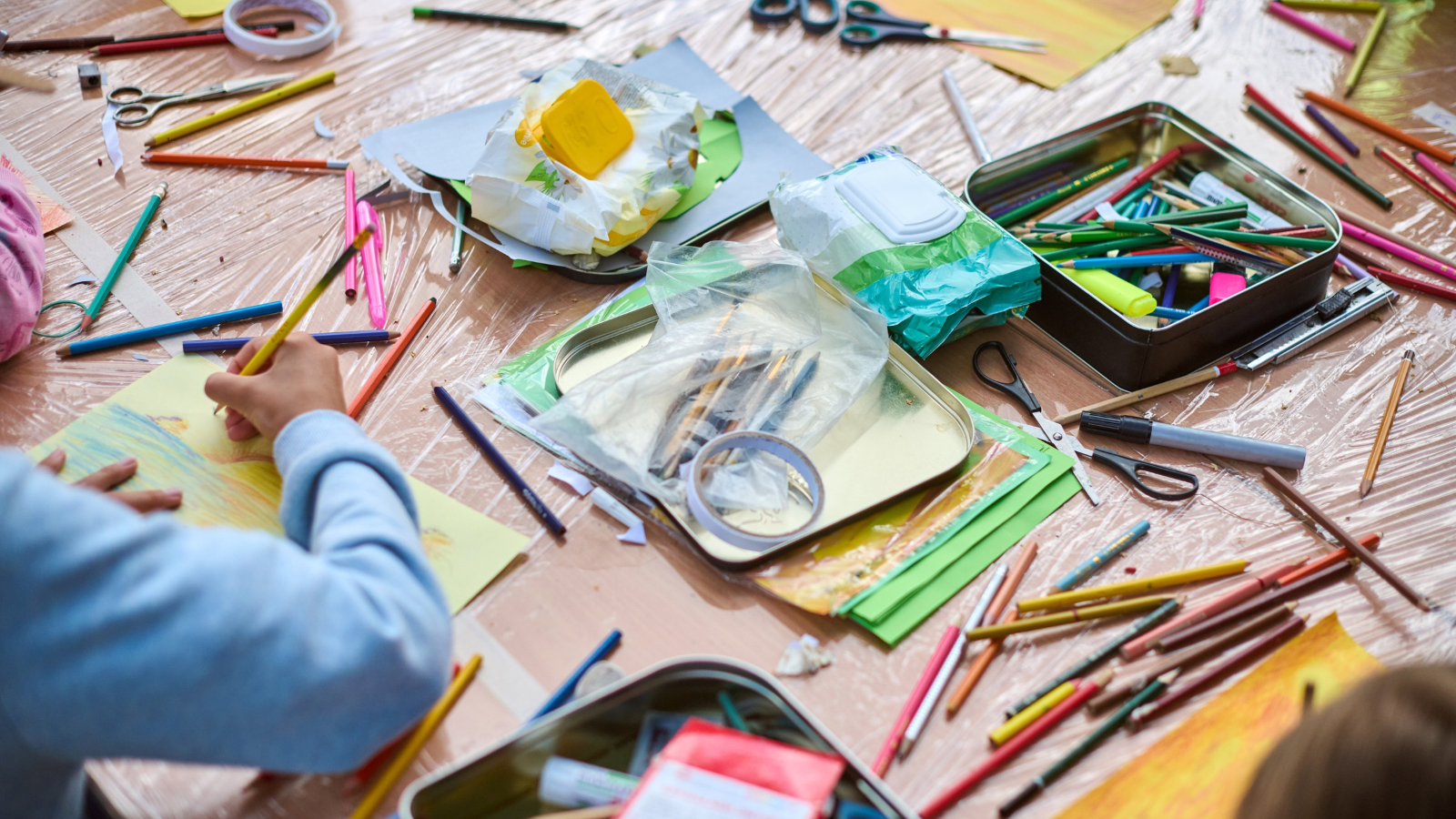
Art teachers know that making a mess can be a big part of making art. You’ve got bunches of brushes covered in paint, random piles of construction paper scraps, and glue sticks missing caps. Students are usually more excited to show off their work than to help tidy up. Sound familiar? Keeping things under control doesn’t mean you need an elaborate system. A few basic routines can encourage students to take ownership of their workspace, protect your supplies, and make the end of each class a little less chaotic.
1. Make Cleanup Part of the Lesson
One of the easiest ways to make cleanup more manageable is to treat it as a regular part of the art-making process. Ideally, the last five to ten minutes of class should be reserved for students to put away their materials, wipe down tables, and check the floor for any rogue art supplies. Setting up an easy-to-read timer or playing a catchy song can help get everyone moving.
2. Give Every Supply a Home
When students aren’t sure where something belongs, you’ll tend to find random supplies wherever there’s an open spot. Having a clear organizational system can make cleanup easier for everyone—including you.
Put labels on your bins, trays, and containers. Or look at adding pictures next to written labels for younger kiddos. It’s best when students can quickly identify where things go throughout the year without constantly asking for a refresher. You might keep markers together, put scissors in separate caddies, and have a designated station for drawing materials. The goal isn’t about making every shelf look perfect. You just want your supplies to be easy to find, easy to use, and easy to put away.
3. Assign Specific Cleanup Jobs
If you haven’t already, try assigning different, specific cleanup roles to each table group. Maybe one student can collect the shared supplies, and another could grab the loose crayons off the floor while a third runs a wet sponge down the table.
There’s also the option of creating a short cleanup checklist for each group. Even something as simple as capping markers can make a big difference for your annual supply budget. Assign a pair of students to rinse brushes while another pair puts the table’s artwork away in the designated area. The right process can help students learn that caring for shared supplies is a critical part of being an artist.
4. Prepare for Messy Projects in Advance
Unlike a traditional classroom, art rooms come with lots of materials to manage. And it’s not just a matter of end-of-day cleanup, but staying on top of the action every hour. You likely have different classes using different supplies throughout the day, and a little preparation can prevent a lot of cleanup later.
Before starting any project that involves paint, clay, printmaking or other messy materials, think about what your students will need and where the biggest messes are likely to happen. Do you need to cover the tables? Have paper towels or sponges at the ready?
It can also help to establish dedicated stations for certain activities. For example, students can collect their paint at one station, rinse brushes at the designated sink, and then leave their wet artwork on a drying rack before returning to their seat. Each activity needs a clear place. Like the proverb says, “A place for everything and everything in its place!”
5. Keep Cleanup Supplies Close By
When spills happen, you’ll want your cleanup materials in a predictable spot. Depending on your classroom setup, that might mean having a small cleanup caddy stocked with paper towels or sponges. A well-stocked cleanup area can make the inevitable messes much easier to manage, so your students can DIY the job!
Make More Room for Creativity
The secret to a well-organized art room isn’t about spending every spare minute cleaning. It happens because students understand your routines and all of the supplies have clear homes. No one’s classroom can be spotless, but a few tricks can certainly streamline things when you already have a lot on your plate.
At Art to Remember, we understand how much work goes into creating a successful art program. That’s why we offer free art lesson plans and resources to help teachers bring engaging projects to their classrooms, along with fundraising programs that help schools earn money from personalized keepsakes that feature children’s artwork.
With the right support, you can spend less time worrying about the logistics and more time helping students explore their creativity. If our process sounds like a fit for your own classroom program, please don’t hesitate to reach out!